Disclaimer: The information on this website is not a substitute for medical or psychological treatment. The content is based on personal practice and emotional work methods, not medical advice. If you are experiencing serious physical or mental health issues, please seek professional help from a qualified doctor or therapist. Emotional work is individual and results may vary.
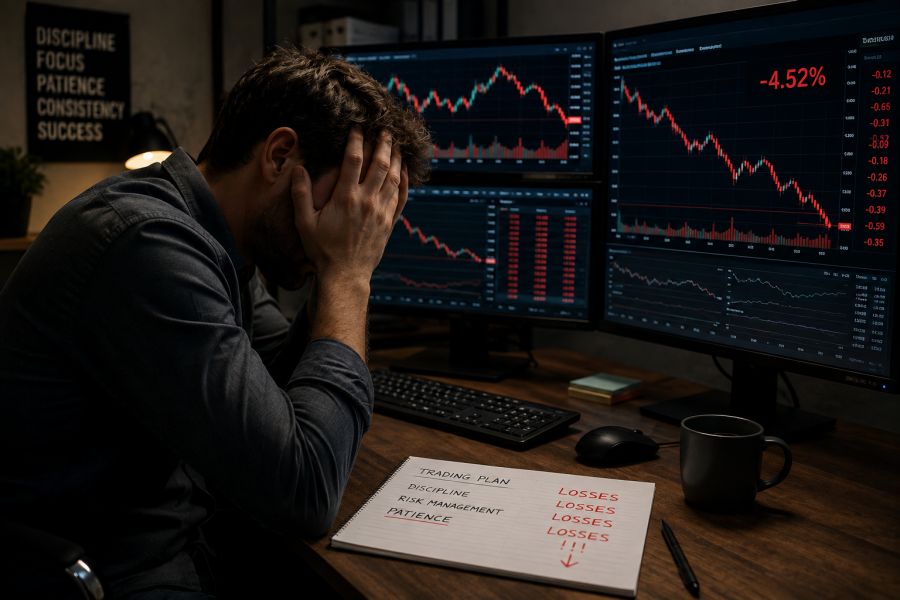
Everyone experiences periods when nothing seems to go right. For some, it may be a series of losing trades. For others, it could be a failed business, an unsuccessful project, or a personal setback. Yet the failure itself is rarely the greatest obstacle. More often, it is the fear that follows.
After experiencing several setbacks, we begin to question ourselves. We lose confidence in our abilities, and every future decision becomes clouded by the fear of making another mistake. In many cases, this emotional burden does far more damage than the original failure ever could.
Robert Smith often reminds us that failure is not the true enemy. The real challenge lies in the meaning we attach to it.
When One Mistake Becomes Your Identity
Imagine a trader who has experienced several consecutive losing trades. The next time they enter the market, they are no longer focused or curious. Instead, they are tense, expecting another loss. Their brain has formed a simple association: trading equals danger.
The same principle applies far beyond financial markets. One unsuccessful job interview can become the belief that we are not good enough. One painful rejection may create fear of future relationships. One mistake can slowly reshape the way we see ourselves.
The event itself is over. Yet our minds continue replaying it, strengthening the same emotional response every time.
Your Results Do Not Define Your Worth
One of the biggest mistakes we make is confusing our performance with our identity. When something goes wrong, it becomes easy to think, "I'm a terrible trader." "I'm not good at business." "I'll never succeed."
In reality, failure simply tells us that a particular strategy did not produce the desired outcome this time. It says nothing about our value as human beings.
Learning to separate your identity from your results is one of the foundations of emotional resilience.
Learn to Let the Failure Go
Robert Smith often uses a simple visualization to help release emotional attachment. Imagine your failure as a heavy stone that you have been carrying in your hands. Feel its weight. Notice every emotion connected to it.
Now imagine placing that stone gently on the ground. You are not throwing away the lesson. You are not pretending the experience never happened. You are simply releasing the unnecessary emotional burden that no longer serves you.
This simple mental exercise can interrupt the cycle of fear and create space for a fresh beginning.
Focus on the Process, Not Just the Outcome
Many people judge every decision solely by its immediate result. If things work out, they feel successful. If they don't, they feel defeated.
Real growth works differently. It happens every time we make a thoughtful decision, regardless of the short-term outcome. It happens through learning, improving, and developing better habits over time.
When we evaluate the quality of our process instead of obsessing over individual results, we become far less vulnerable to temporary setbacks.
Calm Minds Make Better Decisions
Under stress, our brains shift into survival mode. Strategic thinking becomes more difficult, and emotional reactions begin taking control. This is true in trading, business, sports, and everyday life.
That is why emotional regulation is so important. As our nervous system becomes calmer, we regain the ability to think objectively. Fear loses its influence, and clear decision-making returns.
The goal is not to eliminate emotions. The goal is to stop allowing emotions to control every decision we make.
Every New Attempt Is a New Opportunity
Failure is not proof that you should stop. It is evidence that you are learning. Every successful person has experienced periods of disappointment. What often separates them from everyone else is their ability to avoid carrying yesterday's failures into tomorrow's opportunities.
Your previous loss does not have to determine your next decision. Every new moment gives you another opportunity to begin again—with greater experience, greater calm, and greater confidence in yourself.
Whether you trade financial markets, run a business, or simply find yourself facing a difficult chapter in life, remember that lasting transformation does not begin with better results. It begins with changing the way you think about yourself and your experiences.
If you would like to explore emotional healing, personal growth, and the principles of FasterEFT more deeply, you can find additional resources and eBooks that may support your journey enter my store.