Articles on Emotional Freedom & Personal Growth
Filter articles by topic
No matching topics.
Wanting Change While Holding On to the Familiar
The Right to Say No During Tapping
When Even Personal Growth Has to Be Perfect
You Can Share What Helped Without Convincing Everyone
Listening Without Rewriting Someone Else’s Story
Jealousy and the Stories We Fill In for Others
A Pause That Helps You Return to the Problem
Why Certain Words Hit So Hard
When Your Decisions Still Need Parental Approval
What We Tell Ourselves After a Mistake
A Happy Journal Without Forced Optimism
When Our Own Emotions Take Over: How to Step Out of the "Trance Monkey" Mode
Some people experience the stories, moods, and emotions of others with remarkable intensity. Robert Gene Smith uses the provocative term “trance monkey” to describe this type of response. It is not a psychological diagnosis, but a metaphor for how our imagination and internal references can quickly create powerful emotional experiences.
This article explores why we do not necessarily have to literally “absorb” other people’s emotions, how stories and memories can activate our own experiences, and why sensitivity does not have to mean powerlessness. Using FasterEFT principles, we can learn to recognize what creates our emotional response and work with it without suppressing our feelings or withdrawing from the world around us.
When the Technique Is Not Enough: Sharon's Journey from EFT to a Deeper Experience with FasterEFT
Sharon Thompson had practiced traditional EFT for approximately three years when she began looking for an approach that better matched the way she wanted to work with emotions and past experiences. In Robert Gene Smith’s FasterEFT, she was drawn not only to the connection between memories, emotional responses, and physical sensations, but also to the spiritual idea of “One Family.”
Her story offers a personal perspective on the differences between EFT and FasterEFT and on what deeper emotional change can mean. It does not necessarily involve erasing the past or eliminating every uncomfortable feeling. Instead, change may mean reaching a point where old experiences no longer automatically determine how we experience the present or respond to ourselves and other people.
Who Is Really Driving Your Life? How FasterEFT Works with Automatic Responses of the Mind
How many of our reactions do we consciously control, and how many happen automatically based on experiences from our past? In FasterEFT, Robert Gene Smith works with internal references – memories, images, feelings, beliefs, and meanings that our minds use when interpreting present situations.
Fear of Strangers: Working with Social Anxiety Using FasterEFT
Fear of strangers may not actually be fear of the people themselves. Often, what lies underneath is fear of rejection, judgment, awkward silence, or the feeling that we are not good enough. Social situations can then trigger not only uncomfortable thoughts, but very real physical reactions such as a racing heart, tension, shaking, or the urge to leave as quickly as possible.
Why Do Some Things Affect Us Far More Than They Should?
Inspired by the principles of FasterEFT, this article explores the difference between what actually happened and the meaning our mind gives to an event. It looks at how present situations can activate old experiences, fear of rejection or criticism, and feelings of not being good enough. A trigger may not be the true cause of our reaction—it may simply point toward something that was already there.
Why Do We Keep Doing Things We No Longer Want to Do?
How many times have you told yourself that this was the last time, only to find yourself returning to the same behavior later? Repeating patterns are not necessarily proof of weak willpower or a lack of discipline. Sometimes they are responses that our minds once learned as a way to protect us, calm us, or help us cope with difficult emotions.
You Know What You Should Do. So Why Are You Still Not Doing It?
You know what you should change. You may even know exactly how to begin. Yet you keep postponing it for months or even years. Why do we remain in situations that no longer serve us even when we can see another path ahead?
The Fire Within: How to Transform Anger into a Force for Change
Anger can damage relationships and consume our energy, but it does not have to be an emotion we simply try to eliminate. It can also be an important signal pointing toward pain, injustice, crossed boundaries, or experiences we are still carrying with us.
FasterEFT Through the Eyes of the Community: My Journey Toward Greater Calm and Responsibility
FasterEFT did not remove every problem from Sherry’s life. But looking back over the past five years, she recognizes something perhaps even more important—the way she moves through difficult situations has changed.
In this personal story from the FasterEFT community, Sherry reflects on developing greater calm and courage, taking responsibility for her own emotional responses, and appreciating the people who supported her along the way. Her experience is a reminder that personal growth is not about achieving perfection. It is about gradual changes that we sometimes only recognize when we stop and look back at how far we have come.
FasterEFT in Everyday Life: When Emotional Work Becomes a Practical Skill
Do you always need to physically tap on the FasterEFT points? Robert Gene Smith emphasizes that understanding what your mind is reacting to can be even more important than the tapping itself.
When the Body Responds to the Past: The Connection Between Emotions and Physical Symptoms
Can our past experiences influence not only our emotions but also the way we experience our bodies? Through FasterEFT, Robert Smith explores the idea that memories and learned emotional responses can continue activating the nervous system long after the original event has ended.
When Emotions Become Too Intense: Why More Intensity Is Not Always Better in EFT
Is it really necessary to experience painful emotions as intensely as possible when working with EFT? A powerful emotional reaction may look like evidence of deep therapeutic work, but greater intensity does not automatically mean better results.
From Setbacks to Confidence: How to Overcome Failure and Move Forward
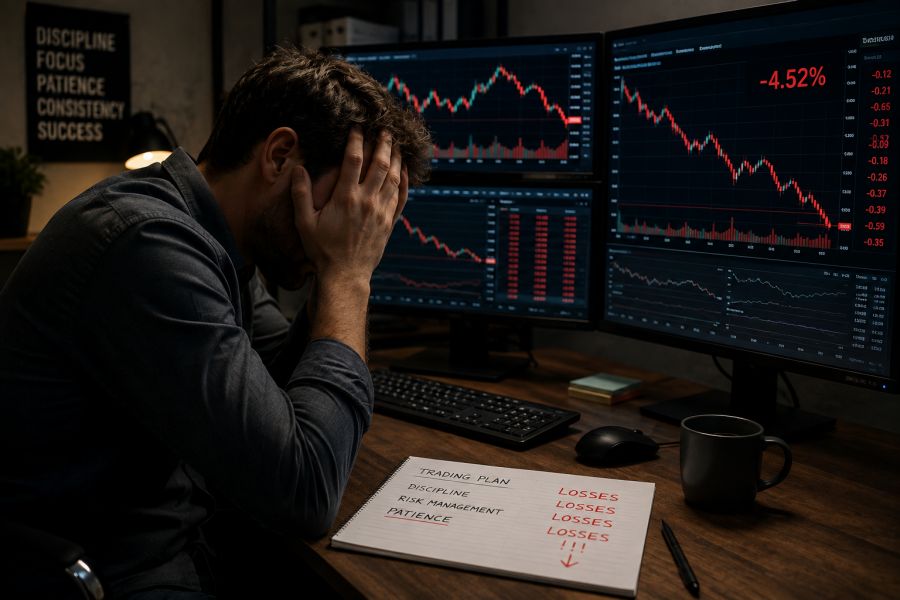
Failure itself is rarely what holds us back. More often, it is the fear, self-doubt, and emotional burden we carry after experiencing it. Whether you’re a trader, entrepreneur, or simply navigating life’s challenges, learning to release past setbacks can dramatically improve your confidence and decision-making.
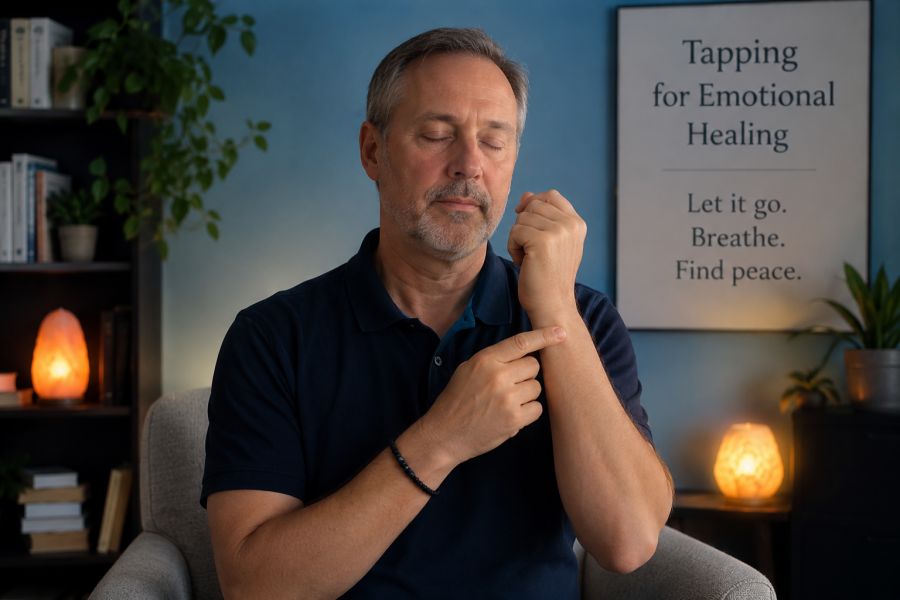
The Tapping Technique: A Simple Way to Calm Your Mind and Emotions
Can you learn to manage stress, anxiety, and overwhelming emotions more effectively? According to Robert Smith, you can. The FasterEFT tapping technique offers a simple yet powerful way to calm the nervous system, release emotional tension, and gradually develop healthier emotional responses.
Breaking Free from the Crowd: Why You Don't Have to Follow Everyone Else
How often do you make decisions simply because they are expected of you? While the desire to belong is natural, constantly following the crowd can slowly disconnect you from your authentic self.
The PBO Effect: How Your Beliefs Shape Your Body and Mind
Can your beliefs influence not only your emotions but also the way your body responds to life? According to Robert Smith, the answer is yes. The PBO Effect (Power of Belief and Observation) explains how the meanings we assign to our experiences shape our thoughts, emotions, and even our physical reactions.
The Power of Self-Forgiveness: A Journey from Guilt to Inner Peace
Guilt and shame can quietly shape our lives for years, preventing us from experiencing peace, confidence, and genuine happiness. Yet true healing often begins with one simple but powerful step—learning to forgive yourself.
When Your Job No Longer Feels Right: How to Overcome the Fear of Changing Careers
Have you been thinking about changing careers but feel held back by fear and uncertainty? You’re not alone. Many people remain in jobs that no longer fulfill them simply because taking the first step feels overwhelming.